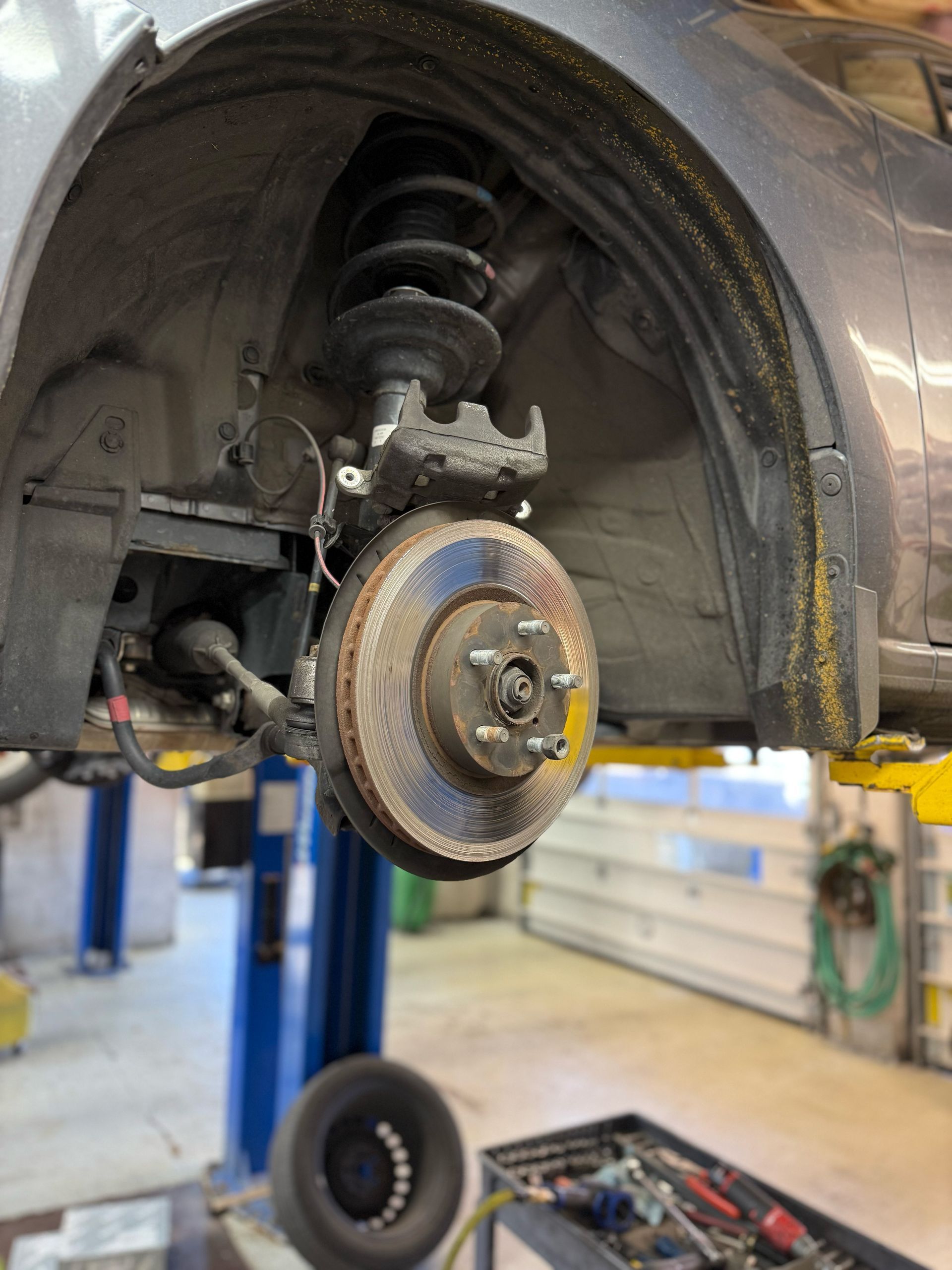
At West Highlands Auto Repair, we inspect suspension components to help drivers understand what is worn, what is urgent, and what can be monitored over time.
Your vehicle’s suspension system does more than make the ride feel smooth. It helps keep your tires planted to the road, supports safe steering, improves braking control, and protects other parts of the vehicle from excess wear. When suspension components wear out, the signs start out small and inconsequential, but ignoring them for too long can lead to uneven tire wear, poor handling, longer stopping distances, and even more expensive repairs down the road.
What Parts Make Up Your Suspension?
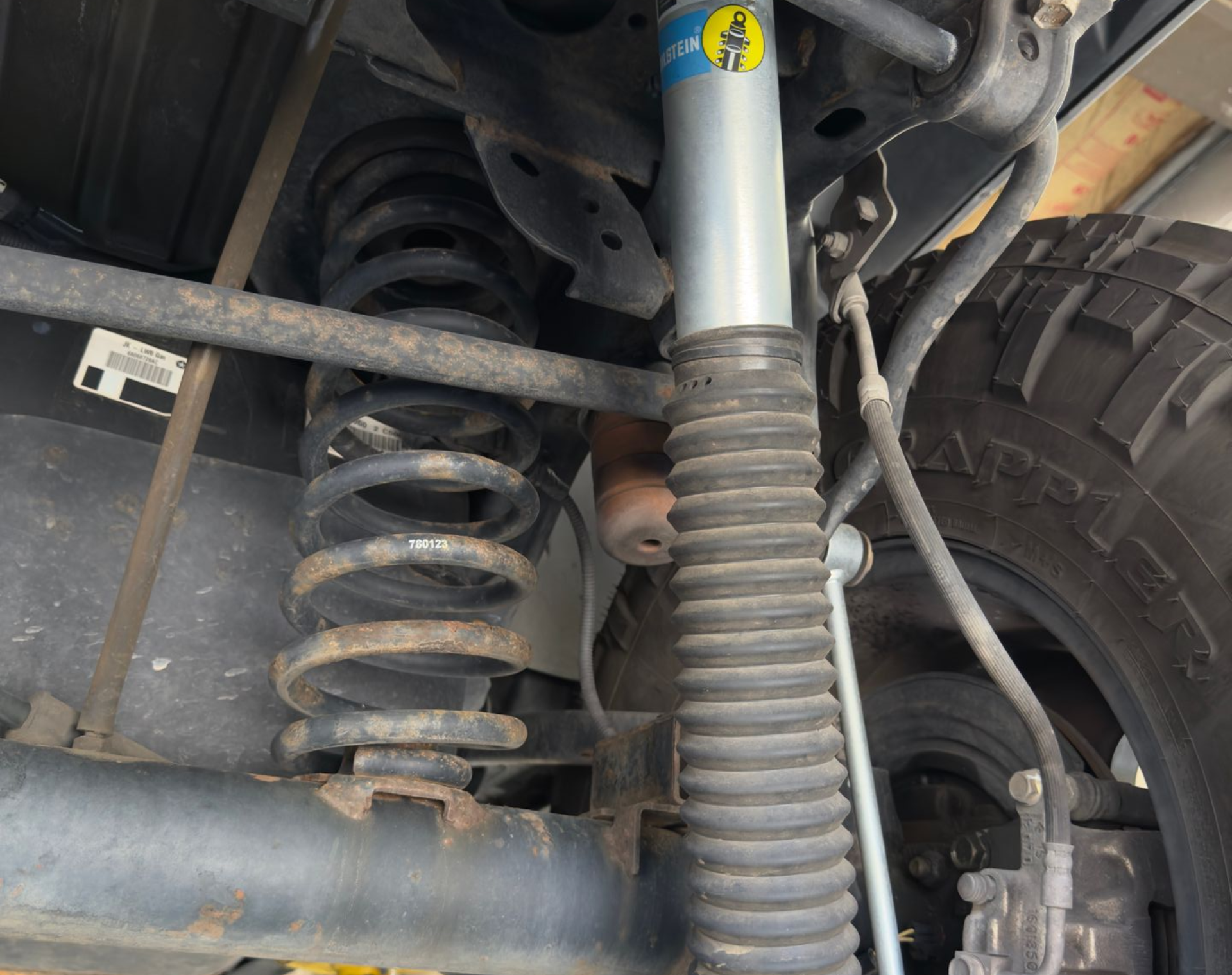
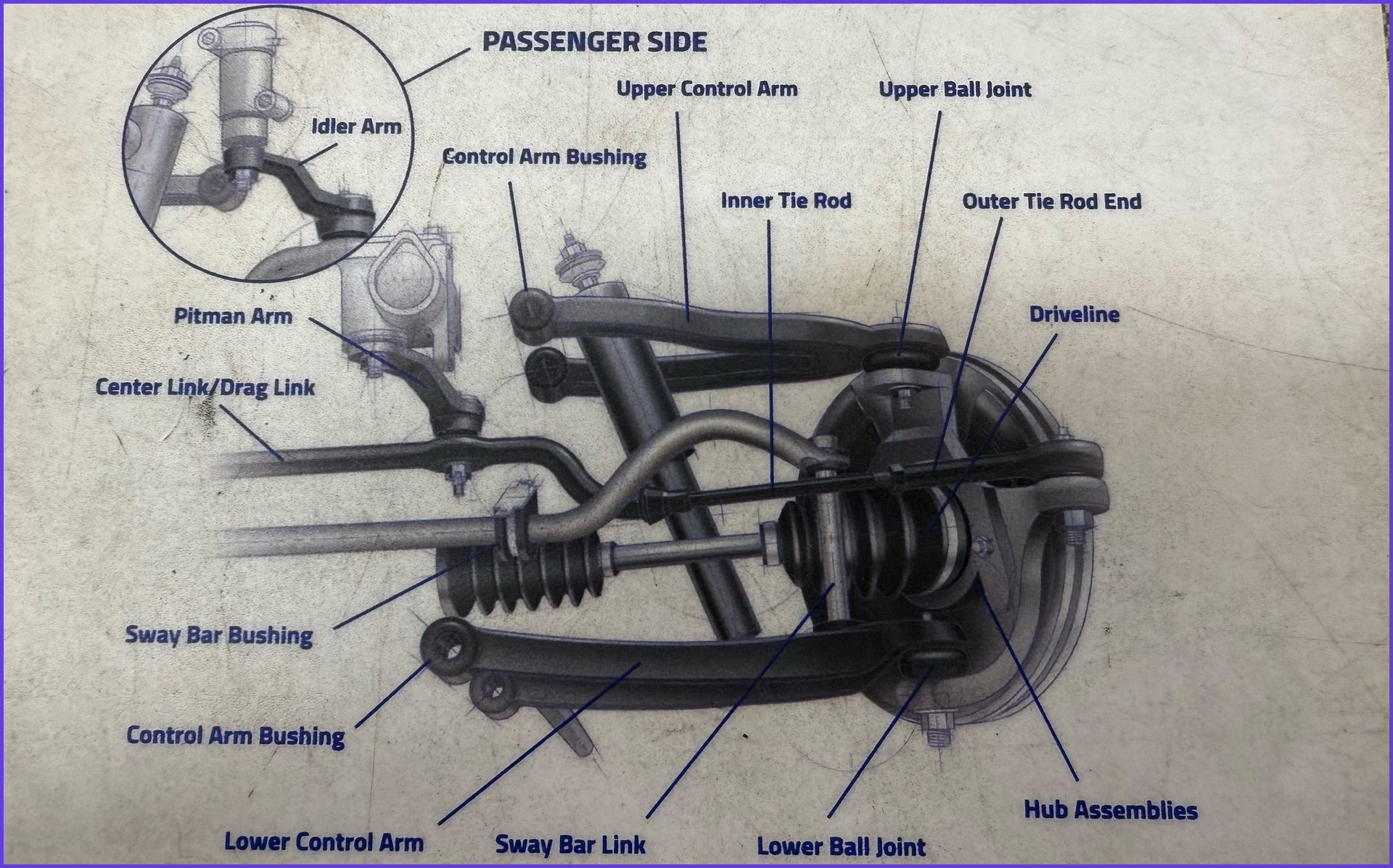
Your suspension system is made up of several components that work together to absorb bumps, support the vehicle’s weight, and keep the wheels properly aligned. Common suspension parts include shocks, struts, control arms, ball joints, tie rods, sway bar links, bushings, coil springs, wheel bearings, and alignment-related components. It’s important to note that different manufacturers (I.e. Toyota, Subaru, Jeep, KIA) have different approaches when it comes to suspension setup & components. Even varying between their own lineup of vehicles.
These parts each play a different role. Some parts affect comfort, while others directly affect steering and safety. That is why not every suspension concern has the same level of urgency.
Common Suspension Fail Points
One of the most common suspension issue is worn
shocks or
struts. These parts help control bouncing and keep your tires firmly connected to the road. When they wear out, the vehicle may feel bouncy, unstable, or rough over bumps. You may also notice the front end dipping when braking or the vehicle swaying more than usual when turning.
Ball joints
and
control arm bushings are also common wear points. Since they’re protected by a rubber seal that weathers and cracks, it often leads to the metal joint part to wear down faster with outside elements entering the joint. Ball joints allow suspension and steering parts to pivot & move smoothly, while bushings cushion metal components and reduce vibration. When these parts wear out, you may hear clunking, popping, or knocking noises, especially over bumps or when turning. Note: Control arm wear and tear most commonly happens through the ball joints & bushings, but the arm itself can be damaged from large road debris or impact. Here’s an example of what I did to my own control arm once…
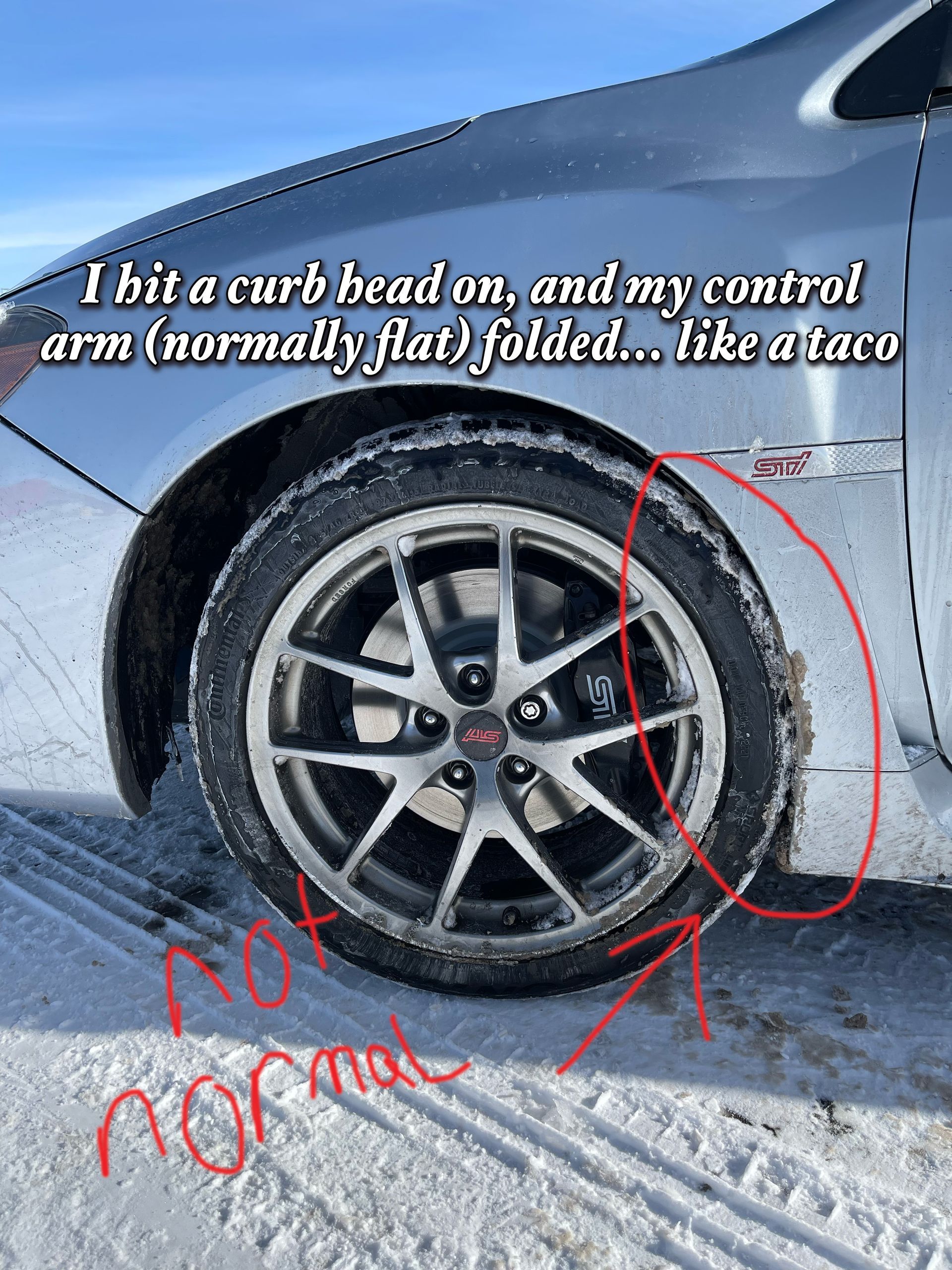
Tie rods (I called them Tire rods for about 10 years) are another important part of the steering and suspension system. A worn tie rod can cause loose steering, uneven tire wear, or a drifting feeling while driving. Since tie rods help control wheel direction, they should not be ignored if they are loose or failing. #1 It’s not safe because controlling the car becomes unpredictable, but #2 and probably what most people will unfortunately listen to, is it can quite literally eat your tires. Tires are not cheap, so make sure to get your alignment & tires checked regularly.
Sway bar links or
Stabilizer bar links and
bushings commonly wear out as well. These parts help reduce body roll when turning. When they fail, they often cause rattling or clunking noises, especially at lower speeds or over uneven roads.
Wheel bearings can also be mistaken for suspension problems. A failing wheel bearing may cause a humming, grinding, or growling noise that changes with vehicle speed. If left alone too long, it can become a serious safety concern and extremely expensive if your vehicle manufacturer chose to build the wheel bearing into the hub assembly (easily over $500, easily).
How Long Can You Drive Without Suspension Repairs?
It depends, it
depends…
it
Depends. If you ask me a general question like "how long do I have with *Insert issue*", my immediate answer will most likely be 'it depends'. The answer
depends
on which part is worn, how badly it is worn, and how the vehicle is being driven. Some suspension issues can be monitored for a short period, while others should be repaired as soon as possible.
If shocks or struts are worn
but not leaking badly or causing major handling problems, you may be able to drive for a while. However, the longer you wait, the more likely you are to experience uneven tire wear, poor ride control, and reduced braking stability. So it depends, but it may not always be pressing like some of the other things on this list.
If sway bar links are worn or noisy, the vehicle may still be drivable for some time, but handling can feel less stable, especially around turns. This type of repair is often less urgent than a loose ball joint or tie rod, but it should still be addressed before it causes additional wear or safety concerns. If you’re a good driver, then maybe stability is not a major concern. But I also drive in Denver, so no, you are not a good driver.
If a ball joint, tie rod, or control arm has
significant play, the repair becomes much more urgent. These parts affect steering control and wheel stability. Driving too long with a severely worn steering or suspension component can lead to unsafe handling, RAPID tire wear, or in extreme cases, component separation- I’ve seen it before, luckily no one was injured besides the wallet of the customer who ended up having to buy new rotors, calipers, backing plate, wheel hub, along with the control arms (the bill was not pretty).
If a wheel bearing is making noise, it should be inspected
ASAP. Some bearings can make noise for a while before failure, but they can worsen quickly. A badly worn wheel bearing can affect wheel movement, braking, and overall safety. It can also heat up from metal on metal contact and burn up the axle, which is not cheap (it happened to me- was it my fault for not practicing what I preach? Yes, yes it was my fault. Did it cost me $500 extra dollars because I drive a sports sedan, yes, yes it did).
How Suspension Problems Affect Your Vehicle
Worn suspension parts can affect your vehicle in several ways. One of the most common issues is
uneven tire wear. If suspension components are loose or the alignment is off, your tires may wear on the inside or outside edges much faster than normal. This can shorten the life of your tires and make the vehicle less predictable on the road. More importantly, it will wear your tires unevenly and if you drive an AWD vehicle, then you will need to buy four tires. If you don’t buy all four, then you could need transfer case & differential work down the line.
Suspension problems can also
affect braking. If shocks or struts are worn, the vehicle may
not stay as stable during hard braking. The front end may dip more than normal, and the tires may not maintain ideal contact with the road. But you already knew that when I mentioned it earlier.
Steering can also become less precise. You may notice the vehicle wandering, pulling, clunking, or feeling loose. Over time, this can make the vehicle less comfortable and
less safe to drive.
Ignoring suspension repairs can also
create a chain reaction. A worn bushing can put
extra stress on a control arm. A bad shock can wear out tires. A loose steering component can affect alignment. What starts as one repair can turn into several if it is not addressed in time.
Ways to Prolong the Life of Your Suspension
One of the best ways to protect your suspension is to
avoid hitting potholes, curbs, and road debris
whenever possible. Denver roads are rough (that’s an understatement), and repeated impact can wear out suspension and steering parts faster.
Keeping your tires properly inflated
also
helps. Low tire pressure can cause extra stress on suspension components and lead to uneven tire wear. At West Highlands Auto Repair, if your tires are low you can stop by and we can air them up at no charge. Regular tire rotations are also important because they help tires wear evenly and make suspension-related issues easier to spot early.
Having your
alignment checked when needed can also extend the life of your suspension and tires. If your vehicle pulls, the steering wheel is off-center, or your tires are wearing unevenly, an alignment inspection is a good idea.
Routine inspections are one of the most helpful ways to catch suspension problems early. Many suspension parts wear gradually, and drivers often get used to the changes over time. A professional inspection can identify loose, leaking, cracked, or worn components before they become bigger problems. We do routine general inspections for every oil change, so if you bring your vehicle into our shop, you’ll always know what’s going on with your vehicle. No guess work or being blindly hopeful in your ‘reliable’ Toyota or Honda. Note: a vehicle is as reliable as your ability to take care of routine maintenance.
It is also important to
pay attention to new noises. Clunks, rattles, squeaks, popping sounds, or grinding noises should not be ignored, especially if they happen while turning, braking, or driving over bumps.
When Should You Schedule a Suspension Inspection?
You should have your suspension inspected if your vehicle feels bouncy, pulls to one side, makes clunking noises, has uneven tire wear, feels loose while steering, dips when braking, or rides rougher than normal. Even small changes can be signs that something is starting to wear.
A suspension inspection can help separate what is urgent from what can be monitored. Not every noise means the vehicle is unsafe, but it is always better to know what is happening before the issue becomes more expensive.
Suspension Repair at West Highlands Auto Repair
At West Highlands Auto Repair, we inspect suspension and steering components carefully so you can make informed decisions about your vehicle. Whether your car needs shocks, struts, ball joints, tie rods, control arms, sway bar links, wheel bearings, or an alignment, our goal is to help keep your vehicle safe, stable, and comfortable on the road.
If your vehicle is making suspension noises, wearing tires unevenly,
or not driving like it used to, schedule an inspection with West Highlands Auto Repair. Catching suspension problems early can help protect your tires, improve your ride, and prevent more costly repairs down the road.
And that's most of it! Definitely a lot more nuance to the whole system, but for the most part these are things to watch out for, to manage, and to have awareness of conceptually. Next I'll discuss Common mechanic misconceptions and how to talk to manage the relationship with your mechanic. As always
Take care of your vehicle, take care of yourself & care for your neighbor.
📍 Visit us at
5440 W 29th Ave, Wheat Ridge, CO
📞 Call us at
(303) 625-6326
💻 Or schedule online:
westhighlandsautorepair.com/appointments
🟥▶️ Check out our New Youtube Channel! Here or at the link below